I'm Nass Seridji, a UX Research leader who turns user evidence into strategy at the speed product teams actually move.
Over 13 years across fintech, life sciences, healthcare, and Fortune 500 enterprise, I've shipped research that influenced $20M in revenue, scaled an enablement program to 200+ designers, and built one of the first production AI agents for research synthesis at ADP.
I don't run studies. I run decisions.
Nass Seridji






“Nass doesn’t just conduct research, he shapes direction. He has the rare ability to connect user insights to business impact and influence decisions at the leadership level.”
“Nass built clarity where there was ambiguity. His research roadmap at Abcam gave teams a shared direction and confidence in their decisions.”
PROJECTS
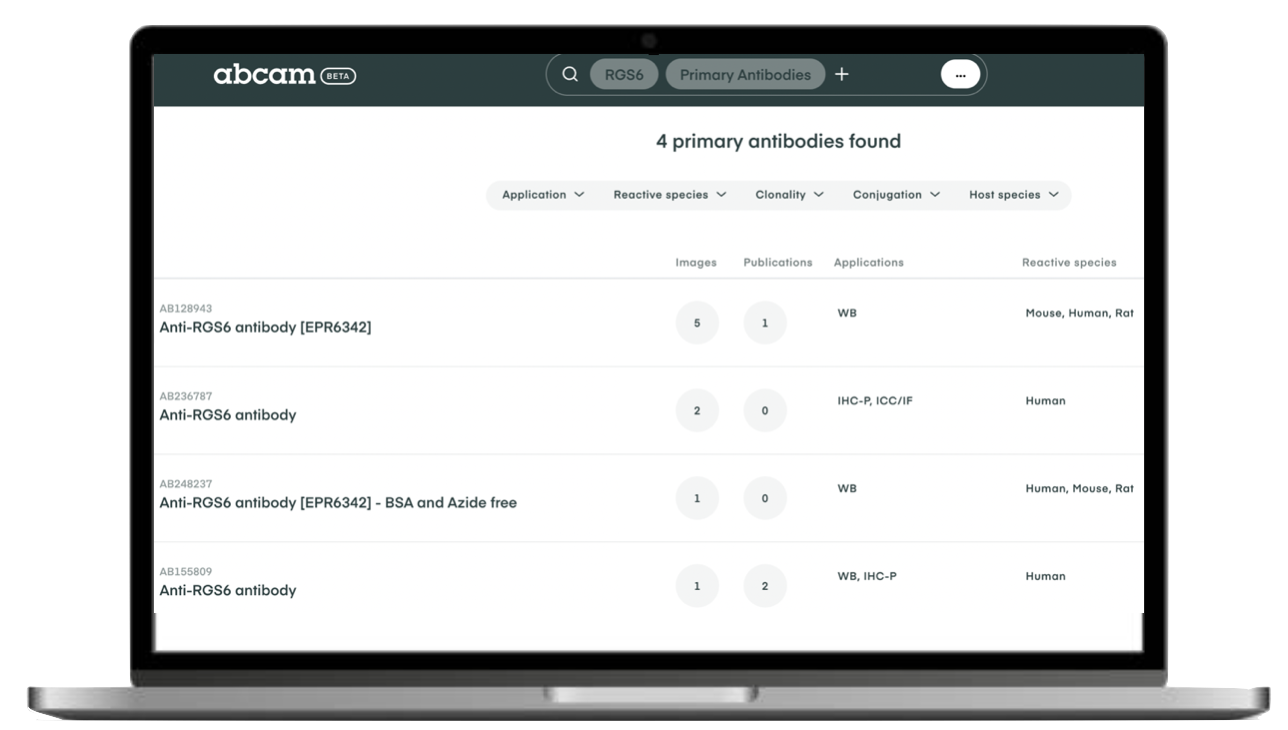
Abcam - Search Reinvented
Reframed e-commerce search around scientific workflow. Lifted revenue 2.5% in 90 days.
e-commerce · life sciences · discovery · foundational
ADP - Research at Scale
Founded an enablement program that turned 200+ designers into a research force multiplier.
research ops · enablement · org design

Centene - Moments That Matter
Foundational study that reset the FY roadmap for provider experience at a 28M member health insurer.
foundational · healthcare · strategy
How I think about research
I am a UX researcher by craft, but a human observer by nature.
This page is a reflection of how I think about research, strategy, and decision-making. If you're considering working with me, hiring me, or engaging with my perspective, start here.
1. Research is a discipline of attention, not of methods.
Methods are how the discipline is taught. Attention is what the discipline actually is.
The methods literature trains researchers to ask better questions, design cleaner protocols, and synthesize larger datasets. None of that is the job. The job is noticing what other people in the room have stopped seeing — the assumption everyone has stopped questioning, the user behavior that's been written off as edge case, the metric that's measuring the wrong thing because no one has revisited it in two years.
A researcher who runs immaculate studies but doesn't change what anyone pays attention to has produced a cost, not an asset.
2. Every research plan should be written backwards from the decision it needs to unlock.
I rarely approve research without a clear decision outcome attached to it.
“We’ll learn more” is not enough. The real question is: what changes because this research exists?
This principle has helped teams eliminate low-impact studies, focus on decision-making, and elevate research from support function to strategic driver.
3. The hardest research problems are not methodological — they're political.
Most senior researchers I respect spend more time on stakeholder management than on study design. Not because the studies are easy, but because the studies are the part of the job that's been figured out.
The hard part is:
Convincing a PM not to A/B test a thing that needs foundational research first
Convincing an exec that the research they commissioned is going to recommend something they didn't want to hear
Convincing an engineering org that talking to users will not slow them down — and then making sure it doesn't
Convincing a designer that a usability test is not a referendum on their work
None of these are taught in research programs. All of them determine whether the work changes anything.
4. AI changes what researchers should spend their time on, not whether researchers should exist.
The synthesis bottleneck — the days a researcher spends coding, tagging, and clustering after fieldwork — is the part of the job that LLMs are already good enough to compress by an order of magnitude. I've built a production agent that does this; I've written about it elsewhere.
The argument I sometimes hear "AI will replace researchers" . It is the argument of people who think research is the part that AI can do. Research is interpretation, judgment, calibration, and the political work above. Augmentation makes those jobs bigger, not smaller, because it removes the tax that was eating researcher hours.
The researchers who will lose work to AI are the ones whose work was the tax.
5. User-centered is not enough.
I was taught, as most of us were, that the user is the center. This is a useful intuition and an incomplete one.
Every product reshapes ecosystems:
Economic — who gets paid, who gets disintermediated
Social — what behaviors are reinforced, what relationships are atomized
Environmental — what gets consumed to keep the service running
Cognitive — what attention is captured, what capacities are atrophied
Generational — what defaults are normalized for people not yet in the user base
A user-research practice that doesn't account for any of this is a tool for optimizing inside a frame someone else has drawn. At the level of work I want to do, the frame is part of the research question.
This isn't a moral position. It's a practical one. Second-order effects are where products lose customers, attract regulation, and burn through trust. The teams I respect are already researching them. The teams that aren't will start to in the next five years; the question is whether their researchers led them there or the consequences did.
6. The best researchers steal from disciplines that have nothing to do with software.
Three of the most useful frames I work with came from outside the field:
Umwelt (from the biologist Jakob von Uexküll) — the idea that every organism inhabits its own perceptual world. Useful for thinking about why two users with identical "needs" experience the same product as different products. I've written about this on Substack.
Aristotle's three appeals (ethos, pathos, logos) — a 2,300-year-old framework for predicting which insights survive the executive room. Logos rarely wins alone. Pathos and ethos do most of the work.
Architectural programming (the discipline of defining what a building should do before designing it) — a model for the work that should happen before design begins, and which most product orgs collapse into the design phase. Research belongs in programming, not in design review.
I look for researchers who read outside the field. Cross-disciplinary borrowing is the cheapest source of competitive advantage in this discipline, and almost no one does it systematically.
7. Writing is the most under-valued senior research skill.
A study that can't be read by a busy executive in four minutes will not influence the decisions worth influencing. Every researcher I've mentored gets the same first feedback on their first report: cut it in half, then cut it in half again.
The premium on clear writing increases with seniority. At Staff and above, your work product is not the study, it's the memo about the study. The researchers who get into executive rooms are the ones whose memos do.
8. The job is to be wrong less often, more usefully.
The discipline trains us to defend our findings. The seniority trains us to audit them.
I keep a private log of every major recommendation I've made and what happened after. About a third have proven directionally wrong. The interesting question is not whether they were wrong — every recommendation made under uncertainty will be — but whether they were wrong in ways that taught me something I now use, or wrong in ways I keep repeating.
A research practice that doesn't include this kind of self-audit is a practice that hardens into ritual.
Closing
I came up through three countries, four industries, and one consistent question: what changes the decision?
The eight beliefs above are the working answer.
They're under revision. If you have a better one, email me.
ARTICLES
I publish weekly on research strategy, AI in the research stack, and the philosophy behind how we ask questions.

Deconstructing the UX Research
Why most research orgs are optimizing the wrong layer of the problem. (7 min read)

Designing for Different Realities: What Umwelt Teaches UX Researchers
What the biological concept of Umwelt teaches us about LLM-user research. (9 min read)

Using Aristotle Concepts as Framework For UX Research Storytelling
How ethos, pathos, and logos predict which insights survive the executive room. (8 min read)